- (+84) 86 696 0800
- htdn@tpm.com.vn
- 102 Phung Van Cung Street, Cau Kieu Ward, Ho Chi Minh City

- (+84) 86 696 0800
- htdn@tpm.com.vn
- 102 Phung Van Cung Street, Cau Kieu Ward, Ho Chi Minh City
Archives
- October 2026
- September 2026
- July 2026
- June 2026
- May 2026
- April 2026
- March 2026
- February 2026
- January 2026
- December 2025
- November 2025
- October 2025
- September 2025
- August 2025
- July 2025
- June 2025
- May 2025
- April 2025
- March 2025
- February 2025
- January 2025
- December 2024
- November 2024
- October 2024
- September 2024
- August 2024
- July 2024
- June 2024
- May 2024
- April 2024
- March 2024
- January 2024
- November 2023
Categories
15 Years of Innovation: The State Tax Bureau for Large Enterprises Pioneering Modern Tax Management
-
Vietnam Achieves Investment-Grade Credit Rating For The First Time From R&I
-
International Institutions Raise Positive Outlook For Vietnam’s Economic Growth In 2026
-
Ready-Built Factories Outpace Industrial Land, Attracting More Than USD 7 Billion In New Manufacturing FDI To Vietnam
-
German Businesses Accelerate Investment In Vietnam’s Green Hydrogen Sector
-
First Eight Months Of 2026: FDI Inflows Into Vietnam Surpass USD 40 Billion
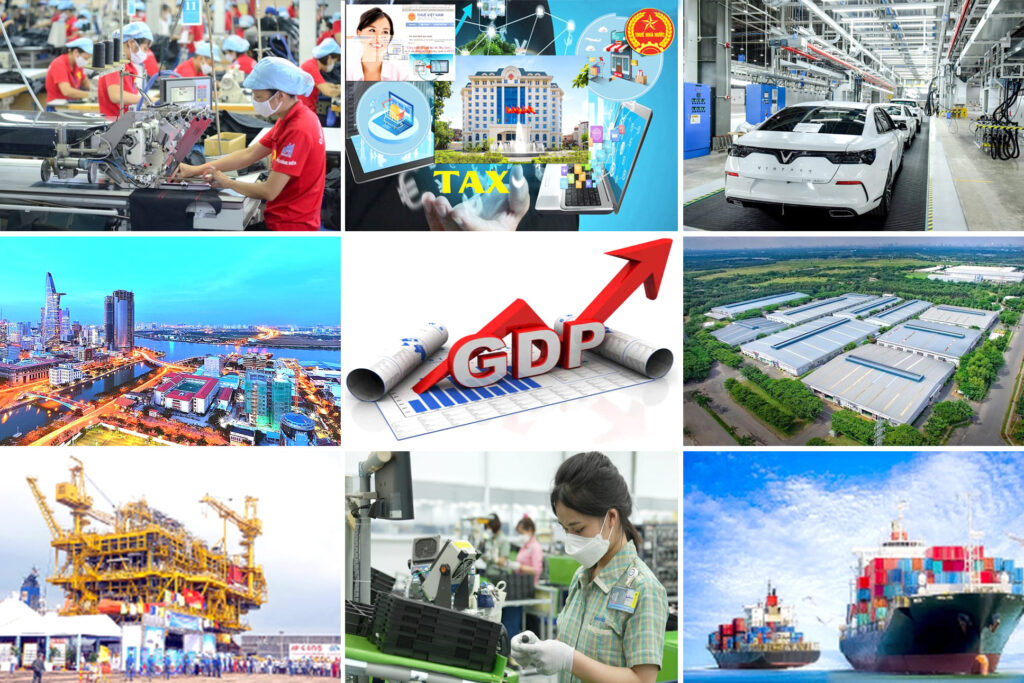
For the past 15 years, the State Tax Bureau for Large Enterprises has affirmed its position as one of the most important units of the Vietnamese tax industry. From a small unit, the Bureau has developed into an agency specializing in tax management for large enterprises, making significant contributions to the state budget and fostering economic growth.
History and Development
Established in 2009, the State Tax Bureau for Large Enterprises initially focused on policy development and assisting large enterprises in complying with tax laws. However, with the deepening of international economic integration and the rapid growth of economic conglomerates, the Bureau has continually expanded its scope and enhanced its management capabilities.
A Crucial Role in the Tax System
- Direct tax management: The Bureau directly oversees the tax obligations of large corporations, foreign-invested enterprises and enterprises operating in key economic sectors.
- Policy development: The Bureau actively participates in formulating and refining tax policies, contributing to a favorable and equitable business environment.
- Pioneering in new economic models: The Bureau proactively applies information technology and modern management methods to oversee taxes for emerging business models such as cross-border e-commerce and the digital economy.
Notable Achievements
- Increased state revenue: The Bureau has achieved remarkable results in increasing state revenue, ensuring a stable financial foundation for the country’s socio-economic development.
- Administrative reform: The Bureau has simplified administrative procedures, facilitating tax compliance for businesses.
- Capacity building: The Bureau has invested heavily in training and developing its workforce, equipping officials with the knowledge and skills necessary to fulfill their duties.
Challenges and Opportunities
In the context of international economic integration and the Fourth Industrial Revolution, the State Tax Bureau for Large Enterprises faces several new challenges:
- Changing taxpayer behavior: Businesses have more options to optimize their tax liabilities, requiring the tax authority to enhance its risk management and tax evasion detection capabilities.
- Complexity of cross-border transactions: The increasing complexity of cross-border transactions demands sophisticated management solutions.
- Growth of the digital economy: The emergence of new business models in the digital economy presents new challenges for tax administration.
However, alongside these challenges, the Bureau also has numerous opportunities for growth:
- Application of information technology: The Bureau can Application of information technology: The Department can take advantage of new technologies such as artificial intelligence and big data to improve tax management efficiency.
- International cooperation: The Bureau can strengthen cooperation with foreign tax authorities to share experiences and best practices.
- Innovating management models: The Bureau can transition from a tax-based management model to a risk-based approach, creating a more conducive environment for tax compliance.
Conclusion
The State Tax Bureau for Large Enterprises has played a pivotal role in Vietnam’s economic development. In the future, with continued dedication and a commitment to innovation, the Bureau is poised to become an even more modern, efficient, and professional tax administration agency.
-
Tax registration and tax declaration for individual business (“IB”) selling goods via Shopee in Vietnam
-
Newest Regional Minimum Wage In 2025
-
Trade Agreements (CPTPP, EVFTA, RCEP) Impact On FDI Enterprises
-
From July 1, 2025: Non-Salaried Business Managers Required To Participate In Mandatory Social Insurance
-
Property Rental Tax Obligations: New Regulations, Declaration & Updated Rates 2025-2026


TPM is proud to be an agency that provides full and excellent services in accounting, tax, HR & advisory services in Vietnam in nowadays business finance market.
Contact Us
TPM TAX AGENCY & CONSULTING CORPORATION
Tax Number: 0312787706
Feel free to contact & reach us!
Address: 102 Phung Van Cung Street, Cau Kieu Ward, Ho Chi Minh City
Email : htdn@tpm.com.vn
Hotline : (+84) 86 696 0800