- (+84) 86 696 0800
- htdn@tpm.com.vn
- 102 Phung Van Cung Street, Cau Kieu Ward, Ho Chi Minh City

- (+84) 86 696 0800
- htdn@tpm.com.vn
- 102 Phung Van Cung Street, Cau Kieu Ward, Ho Chi Minh City
Archives
- October 2026
- September 2026
- July 2026
- June 2026
- May 2026
- April 2026
- March 2026
- February 2026
- January 2026
- December 2025
- November 2025
- October 2025
- September 2025
- August 2025
- July 2025
- June 2025
- May 2025
- April 2025
- March 2025
- February 2025
- January 2025
- December 2024
- November 2024
- October 2024
- September 2024
- August 2024
- July 2024
- June 2024
- May 2024
- April 2024
- March 2024
- January 2024
- November 2023
Categories
US Tariffs Loom Over Vietnam's Wood Industry: How Will Businesses Survive and Thrive in the Trump 2.0 Era?
US Tariff Risks Threaten Vietnamese Wood Exports
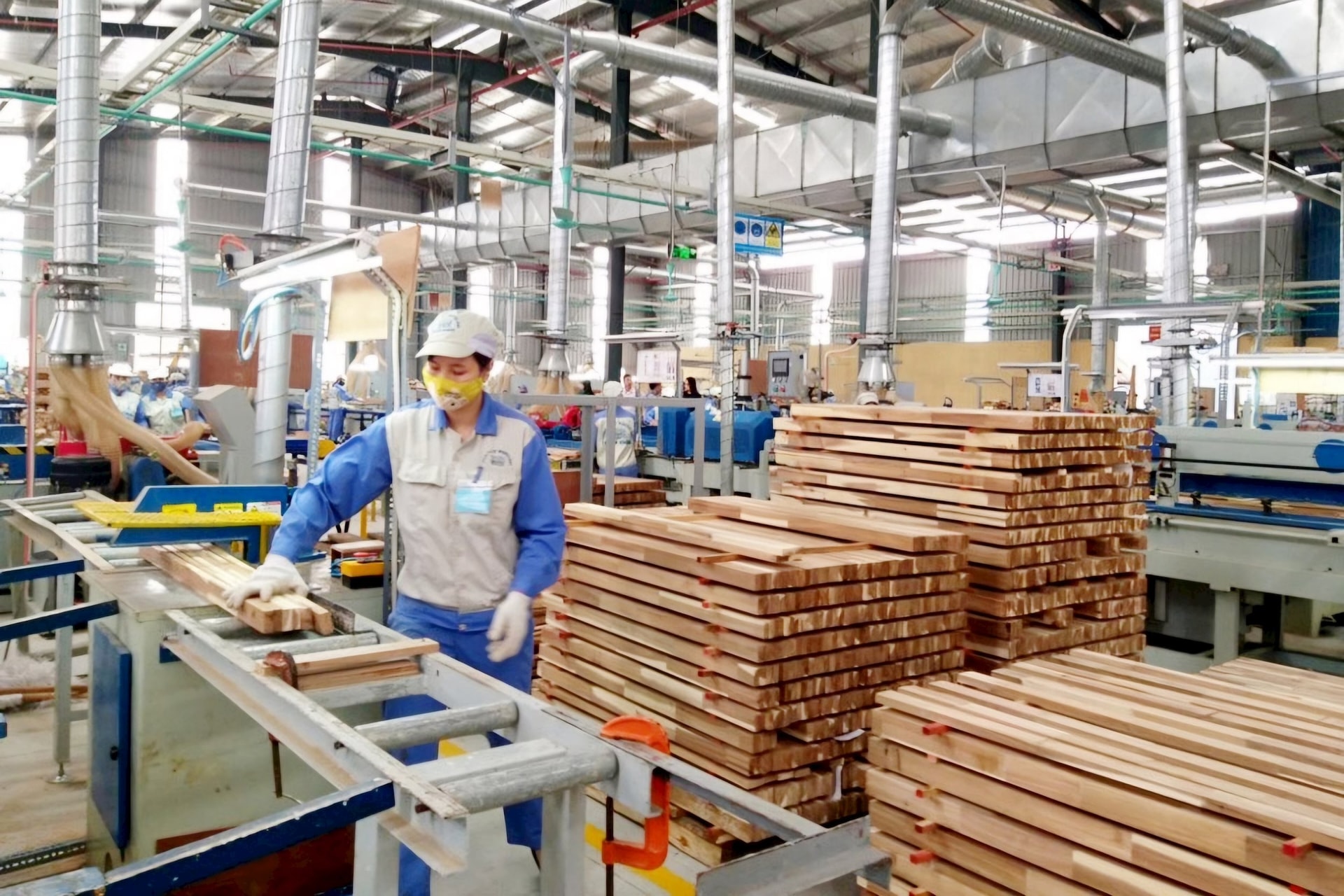
The news that US President Donald Trump has decided to impose a 25% tariff on Vietnamese wood businesses exporting to the United States became a hot topic at HawaExpo 2025 recently. This is unwelcome news for Vietnam’s wood industry, as the US is currently the largest wood export market, accounting for 55% of the country’s total export turnover.
Why is a 25% US Tariff a “Fatal Blow” to Vietnamese Wood?
Currently, Vietnamese wood products exported to the US enjoy a 0% tariff rate. In contrast, similar products from China are subject to a 25% tariff. If Vietnam also faces a similar tariff, the current competitive advantage will completely disappear.
“If Vietnamese wooden furniture products are subject to a 25% tariff, it will be very difficult to compete with Chinese wooden furniture products, even though they have recently been subject to an additional 10% tariff by the US,” shared a representative of a business that exports over 90% of its wood products to the US.
This implies that Vietnamese businesses will have to reduce export prices to maintain competitiveness. However, price reductions could shrink business profits, potentially leaving insufficient funds for production reinvestment.
What Do Vietnamese Wood Businesses Need to Do to “Weather the Tariff Storm”?
Faced with this challenging situation, experts and wood industry associations have issued important recommendations to help businesses respond and mitigate risks:
1. Diversify Export Markets: Don’t “Put All Your Eggs in One Basket”
Over-reliance on a single market like the US always carries inherent risks. Market diversification is the leading strategic solution to reduce dependence and enhance business resilience.
Mr. Suan Teck Kin, Director of Market Research and Global Economics, UOB Singapore, emphasized:
“Diversification has been and continues to be a policy from the regional, national level down to each business; one should not be dependent on any single market.”
Potential markets that Vietnamese wood businesses can target include:
- Southeast Asia: A geographically close market with many similarities in culture and consumer demand.
- Middle East: A market with rich potential and growing demand for construction and interior furnishings.
- Europe: A market with high requirements for quality and sustainability, aligning with the development trends of Vietnam’s wood industry.
- Latin America: An emerging market with significant growth potential.
- Singapore: A small market but a major trading hub, potentially serving as a gateway to other markets.
2. Ensure Legal Timber Origin and Transparent Production Processes
The Handicraft and Wood Industry Association of Ho Chi Minh City (HAWA) advises businesses to pay particular attention to timber origin and production processes. Violations of regulations on origin and provenance may subject businesses to investigation and anti-dumping duties from the US.
“The US tends to pay attention to origin fraud, so businesses should be careful not to let goods from China or other countries borrow Vietnam’s label when exporting to the US. Shipments must be verified as entirely originating from Vietnam,” emphasized Mr. Phung Quoc Man, Chairman of HAWA.
3. Leverage Advantages from Free Trade Agreements (FTAs)
Vietnam has signed numerous free trade agreements with countries and regions worldwide. Businesses need to proactively leverage tariff preferences from these FTAs to expand markets and reduce dependence on the US market.
4. Enhance Competitiveness and Value-Added for Products
To compete effectively in the international market, Vietnamese wood businesses need to focus on enhancing competitiveness through:
- Investing in technology and improving production processes: Reducing costs, improving quality and productivity.
- Developing new products and diversifying designs: Meeting the diverse demands of the market.
- Building brands and product narratives: Enhancing added value and creating differentiation.
- Focusing on sustainable development: Meeting increasingly stringent international market standards for the environment and society.
5. Expect a “Tax Agreement” and Opportunities from Domestic Public Investment
Representatives from UOB Singapore reassured that the tariff information is just an initial step. Drawing from the experience of the Trump 1.0 era, President Donald Trump often makes “extreme” announcements to create a negotiating table.
“Following Trump’s moves, UOB predicts that the first half of 2025 will indeed be very stressful, but the tariff issue will be negotiated in the second half of 2025,” commented the UOB representative.
In addition, the Vietnamese government’s promotion of public investment in infrastructure will also create significant opportunities for domestic businesses, helping to mitigate external risks and lay the foundation for sustainable economic growth.
Proactively Respond to Turn Challenges into Opportunities
The “tariff storm” from the US is a major challenge for Vietnam’s wood industry. However, if businesses respond proactively, flexibly change strategies, and effectively leverage opportunities, they can completely overcome difficulties and continue to develop sustainably in the new era.
-
Vietnam Achieves Investment-Grade Credit Rating For The First Time From R&I
-
International Institutions Raise Positive Outlook For Vietnam’s Economic Growth In 2026
-
Ready-Built Factories Outpace Industrial Land, Attracting More Than USD 7 Billion In New Manufacturing FDI To Vietnam
-
German Businesses Accelerate Investment In Vietnam’s Green Hydrogen Sector
-
First Eight Months Of 2026: FDI Inflows Into Vietnam Surpass USD 40 Billion
-
Tax registration and tax declaration for individual business (“IB”) selling goods via Shopee in Vietnam
-
Newest Regional Minimum Wage In 2025
-
Trade Agreements (CPTPP, EVFTA, RCEP) Impact On FDI Enterprises
-
From July 1, 2025: Non-Salaried Business Managers Required To Participate In Mandatory Social Insurance
-
Property Rental Tax Obligations: New Regulations, Declaration & Updated Rates 2025-2026


TPM is proud to be an agency that provides full and excellent services in accounting, tax, HR & advisory services in Vietnam in nowadays business finance market.
Contact Us
TPM TAX AGENCY & CONSULTING CORPORATION
Tax Number: 0312787706
Feel free to contact & reach us!
Address: 102 Phung Van Cung Street, Cau Kieu Ward, Ho Chi Minh City
Email : htdn@tpm.com.vn
Hotline : (+84) 86 696 0800