- (+84) 86 696 0800
- htdn@tpm.com.vn
- 102 Phung Van Cung Street, Cau Kieu Ward, Ho Chi Minh City

- (+84) 86 696 0800
- htdn@tpm.com.vn
- 102 Phung Van Cung Street, Cau Kieu Ward, Ho Chi Minh City
Archives
- October 2026
- September 2026
- July 2026
- June 2026
- May 2026
- April 2026
- March 2026
- February 2026
- January 2026
- December 2025
- November 2025
- October 2025
- September 2025
- August 2025
- July 2025
- June 2025
- May 2025
- April 2025
- March 2025
- February 2025
- January 2025
- December 2024
- November 2024
- October 2024
- September 2024
- August 2024
- July 2024
- June 2024
- May 2024
- April 2024
- March 2024
- January 2024
- November 2023
Categories
Early Retirement Policy: 4 New Groups Benefiting Under Decree 67
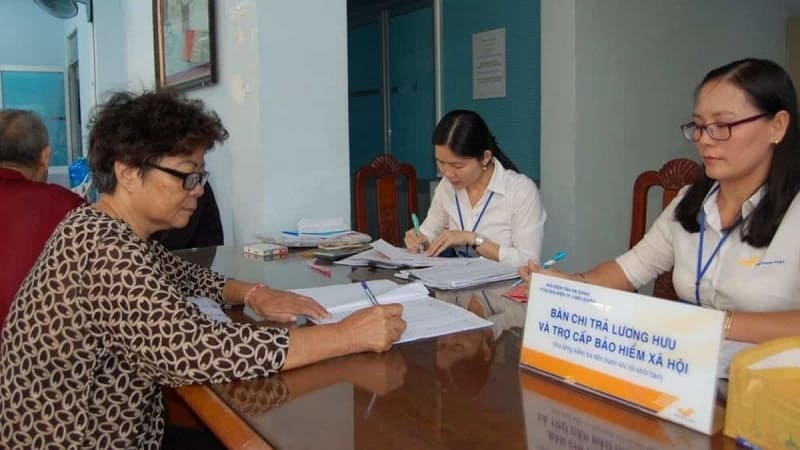
According to Decree 67, there have been adjustments and additions to the subjects entitled to the early retirement policy during the streamlining of the political system. This Decree amends and supplements Article 2 on the subjects of application, implemented according to the conclusion of the Politburo. Below is detailed information about the 4 newly added groups.
Group Of Cadres, Civil Servants, And Public Employees Holding Leadership And Management Positions Who Wish To Retire
This group includes cadres, civil servants, and public employees currently holding leadership and management positions in agencies, organizations, and units who wish to retire early. The purpose of this policy is to facilitate the rearrangement of the number of cadres, civil servants, and public employees in leadership and management positions in accordance with legal regulations during the reorganization of the political system’s apparatus.
Group Of Cadres, Civil Servants, Public Employees, Employees, And Armed Forces Members Approaching Retirement Age
This is the group of cadres, civil servants, public employees, employees receiving salaries from the state budget before January 15, 2019, and armed forces members who have 5 years or less until their retirement age. They work in agencies, organizations, and units not directly affected by the reorganization of the apparatus but still required to implement staff reduction, restructuring, and quality improvement of the workforce.
Group Of Individuals Working At Associations Assigned Tasks By The Party And The State
This group includes individuals working within the payroll quota and receiving salaries from the state budget at associations assigned tasks by the Party and the State at the central, provincial, and district levels. They are directly affected by the implementation of the arrangement, consolidation, and merger of the organizational apparatus.
Group Of Cadres Not Meeting The Age Requirement For Re-Election Or Reappointment, And Other Special Cases
This group includes several specific subjects:
- Cadres who do not meet the age requirement for re-election or reappointment.
- Cadres who meet the age requirement for re-election or reappointment at the same level of Party Committee, with a remaining working period of 2.5 years (30 months) to 5 years (60 months) until the prescribed retirement age.
- Cadres participating in Party Committees at various levels who must conclude their activities and consolidate the organizational apparatus, with 5 years or less until retirement age, who wish to retire early to facilitate the arrangement of Party Committee personnel during Party Congresses at all levels leading up to the 14th National Party Congress, and who are approved by competent authorities.
Benefits For Early Retirement Under Decree 67
Decree 67 clearly stipulates the benefits for subjects retiring early, including:
- Cases where there are 2 to 5 years remaining until retirement age: If there is sufficient working time with mandatory social insurance contributions to receive a pension, in addition to the prescribed retirement benefits, the pension rate will not be reduced due to early retirement. Simultaneously, they will receive a subsidy of 5 months of their current salary for each year of early retirement, 5 months of their current salary for the first 20 years of work with mandatory social insurance contributions, and 0.5 months of their current salary for each year of work with mandatory social insurance contributions from the 21st year onwards. If there are 15 years or more of work with mandatory social insurance contributions and they are eligible for a pension, they will receive a subsidy of 4 months of their current salary for the first 15 years of work and 0.5 months of their current salary for each year of work with mandatory social insurance contributions from the 16th year onwards.
- Cases where there are more than 5 to 10 years remaining until retirement age: If there is sufficient working time with mandatory social insurance contributions to receive a pension, the pension rate will not be reduced due to early retirement. They will receive a subsidy of 4 months of their current salary for each year of early retirement, 5 months of their current salary for the first 20 years of work with mandatory social insurance contributions, and 0.5 months of their current salary for each year of work with mandatory social insurance contributions from the 21st year onwards. If there are 15 years or more of work with mandatory social insurance contributions and they are eligible for a pension, they will receive a subsidy of 4 months of their current salary for the first 15 years of work and 0.5 months of their current salary for each year of work with mandatory social insurance contributions from the 16th year onwards.
- Cases where there are 2 to 5 years remaining until retirement age and have 15 years or more of working in heavy, hazardous, dangerous, or especially heavy, hazardous, dangerous occupations, or working in areas with exceptionally difficult socio-economic conditions: If there is sufficient working time with mandatory social insurance contributions to receive a pension, the pension rate will not be reduced due to early retirement. They will receive a subsidy of 5 months of their current salary for each year of early retirement, 5 months of their current salary for the first 20 years of work with mandatory social insurance contributions, and 0.5 months of their current salary for each year of work with mandatory social insurance contributions from the 21st year onwards. If there are 15 years or more of work with mandatory social insurance contributions and they are eligible for a pension, they will receive a subsidy of 4 months of their current salary for the first 15 years of work and 0.5 months of their current salary for each year of work with mandatory social insurance contributions from the 16th year onwards.
Funding For Policy Implementation
Decree 67 also adjusts the funding for the implementation of the policy for public employees and employees in public non-business units. Specifically:
- For public non-business units that ensure their own regular and investment expenditures, and public non-business units that ensure their own regular expenditures: Funding comes from revenue from their professional activities and other legal revenue sources. If insufficient, they can use allocated funds according to regulations.
- For public non-business units that ensure their own regular expenditures through state orders but whose service prices do not fully account for the factors needed to implement the policy: The funding will be supplemented by the state budget.
Abolition Of Regulations On Additional Support Policies From Local Authorities
Decree 67 has abolished Clause 6 of Article 19, according to which the People’s Committees of provinces and centrally-run cities are no longer allowed to submit to the People’s Councils at the same level for the issuance of additional support policies for subjects under their management based on the balance of the local budget.
In summary, Decree 67 has expanded the subjects eligible for the early retirement policy during the streamlining of the state apparatus, while clearly stipulating the benefits and funding for implementation, bringing significant changes to social welfare policy.
-
Vietnam Achieves Investment-Grade Credit Rating For The First Time From R&I
-
International Institutions Raise Positive Outlook For Vietnam’s Economic Growth In 2026
-
Ready-Built Factories Outpace Industrial Land, Attracting More Than USD 7 Billion In New Manufacturing FDI To Vietnam
-
German Businesses Accelerate Investment In Vietnam’s Green Hydrogen Sector
-
First Eight Months Of 2026: FDI Inflows Into Vietnam Surpass USD 40 Billion
-
Tax registration and tax declaration for individual business (“IB”) selling goods via Shopee in Vietnam
-
Newest Regional Minimum Wage In 2025
-
Trade Agreements (CPTPP, EVFTA, RCEP) Impact On FDI Enterprises
-
From July 1, 2025: Non-Salaried Business Managers Required To Participate In Mandatory Social Insurance
-
Property Rental Tax Obligations: New Regulations, Declaration & Updated Rates 2025-2026


TPM is proud to be an agency that provides full and excellent services in accounting, tax, HR & advisory services in Vietnam in nowadays business finance market.
Contact Us
TPM TAX AGENCY & CONSULTING CORPORATION
Tax Number: 0312787706
Feel free to contact & reach us!
Address: 102 Phung Van Cung Street, Cau Kieu Ward, Ho Chi Minh City
Email : htdn@tpm.com.vn
Hotline : (+84) 86 696 0800